No More Bland Watermelons! A Gentle, Science-Backed Guide to Choosing the Sweetest One at the Market

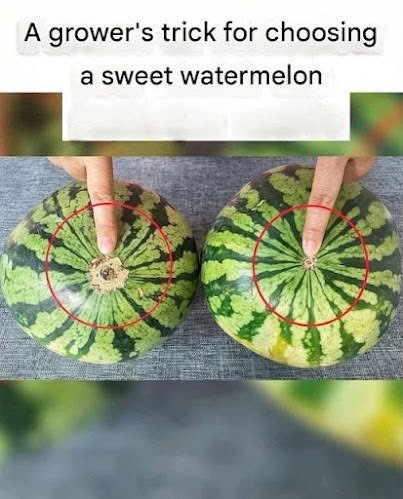
Step-by-Step: The 5 Clues to a Perfect Watermelon
You don’t need to be a professional farmer or produce expert to become better at choosing watermelons. A few easy-to-recognize characteristics can help you make a more informed, confident choice.
1. Look for a Large, Creamy Yellow Field Spot
One of the first things I look for is the discolored patch on the bottom of the watermelon. This is commonly called the “field spot.” It is the area where the watermelon rested against the ground while growing.
Discover more
Cookware & Diningware
Baked Goods
Pork
The Clue: A watermelon with a creamy, buttery yellow to deep orange-yellow field spot is a much better sign than one with a very pale white or greenish spot. A pronounced yellow patch indicates that the fruit spent ample time resting on the ground, developing its sugars and maturing fully on the vine.
2. Don’t Be Afraid of Brown Webbing
Those rough, brown, web-like marks on a watermelon’s rind may not look particularly attractive, but they aren’t necessarily a bad thing. In fact, many seasoned shoppers specifically look for these markings!
The Clue: The webbing consists of scar-like markings that develop as the fruit grows and expands. While it isn’t a strict scientific guarantee that more webbing equals more sugar, pronounced webbing is a strong visual indicator of a melon that has been pollinated well and has developed robust, sweet flesh. Don’t automatically reject a watermelon simply because its skin isn’t perfectly smooth. Sometimes the less-than-perfect-looking melon is the one worth taking home.
3. Choose a Symmetrical Shape
Take a moment to look at the overall shape of the watermelon. Whether you prefer a round melon or a more elongated variety, look for one that appears reasonably uniform and well-developed.
The Clue: Avoid fruit with major dents, unusual bulges, deep irregularities, or obvious areas of damage. A symmetrical shape indicates that the fruit received consistent water and sunlight, allowing it to develop evenly. Think of it as one more piece of helpful information rather than a magic rule.
Discover more
Desserts
Grains & Pasta
Candy & Sweets
4. Pick It Up and Check the Weight
This is one of my favorite tricks because it takes only a few seconds and relies on simple physics.
The Clue: Pick up the watermelon and compare it with another watermelon of roughly the same size. The one that feels surprisingly heavy for its size is often worth considering. Watermelon is naturally very high in water, so a dense, heavy fruit is a good sign that you are getting a juicy melon rather than one that has dried out or lost moisture. The simple rule: If two melons look similar in size, choose the one that feels heavier.
5. Check the Stem End
(This is the clue the original article cut off, but it is a vital one!)
Look at the little stem area at the top of the watermelon.
The Clue: If the stem is dry, brown, and corky, it means the watermelon ripened fully on the vine and naturally detached (or was ready to be picked). If the stem is still green and fresh-looking, it is a strong indicator that the melon was harvested too early and may not have reached its peak sweetness.
Pro-Tips for Everyday Summer Joy
The “Potluck Hero” Serving Idea: Once you’ve secured the perfect melon, keep the preparation fuss-free and elegant. I love a simple, 3-ingredient summer salad: cubed sweet watermelon, a sprinkle of salty feta cheese, and fresh torn mint leaves. It is resourceful, visually appealing, and always a crowd-pleaser at community gatherings.
Storage Wisdom: If you buy a whole watermelon, it can be kept at room temperature for about a week. However, once you cut into it, wrap the cut surface tightly in plastic wrap or store the cubes in an airtight container in the refrigerator. It will stay fresh and crisp for 3 to 4 days.
Listen to Your Body: As someone who values frugal, resourceful living, I hate to see food go to waste. But if a melon does turn out to be a dud, don’t force yourself to eat it! Blend it into a smoothie with a little lemon juice and honey to mask the blandness, or compost it to feed your garden.
Frequently Asked Questions
Can I ripen a watermelon at home after I buy it?
Unfortunately, no. Unlike bananas or avocados, watermelons are non-climacteric fruits. This means they do not continue to produce ethylene gas or ripen after they are harvested. What you see at the market is exactly what you will get at home, which is why using these visual clues is so important!
Do organic watermelons taste sweeter?
Not necessarily. The sweetness of a watermelon is determined much more by the variety, the amount of sunlight it received, the soil quality, and the time it spent on the vine than by whether it was grown organically. A conventionally grown melon with a perfect yellow field spot will often beat an organic one with a white field spot.
Discover more
North American Cuisine
Cooking & Recipes
Pork Chops
Is it true that tapping the watermelon works?
It can be a helpful secondary clue! A ripe watermelon will often produce a deep, hollow, resonant sound (like a tenor drum) when tapped. An underripe melon sounds tight and high-pitched, while an overripe, mushy melon sounds dull and flat. However, the visual clues (like the field spot and stem) are generally much more reliable for the average shopper.
A Final Thought
Living alone has taught me that the small, everyday choices we make are the true foundation of our emotional and physical well-being. Taking an extra thirty seconds at the grocery store to turn over a watermelon and check its field spot is a quiet, powerful act of self-care. It ensures that when you finally sit down to enjoy a slice on your porch, it is a moment of pure, refreshing joy, not disappointment.
You are resilient, you are capable, and you deserve to enjoy the simple, sweet pleasures of the season. By arming yourself with a little bit of produce knowledge, you strip away the guesswork and take back your power at the market.
Have you ever had a trick for picking the perfect summer fruit, or do you have a favorite, fuss-free way to serve watermelon at your family gatherings? Drop a comment below and share your wisdom—I would absolutely love to read your tips and support each other. And if you know a friend who always seems to end up with bland melons, please share this gentle guide with them. Here’s to calm minds, sweet summers, and many more refreshing, delicious days ahead!
For Complete Cooking STEPS Please Head On Over To Next Page Or Open button (>)

Stop Throwing Away Your Old Pill Bottles: 12 Clever Ways to Repurpose Them

Weak or Brittle Nails: What Your Body Is Trying to Tell You

The Real Causes of Constant Phlegm and Mucus in Throat and How to Get Rid of It

This is why we get cramps at night

If you have these lines on your nails after 40, it is a clear sign that..

Legendary Voice That Once Ruled the Charts Is Gone…See more
